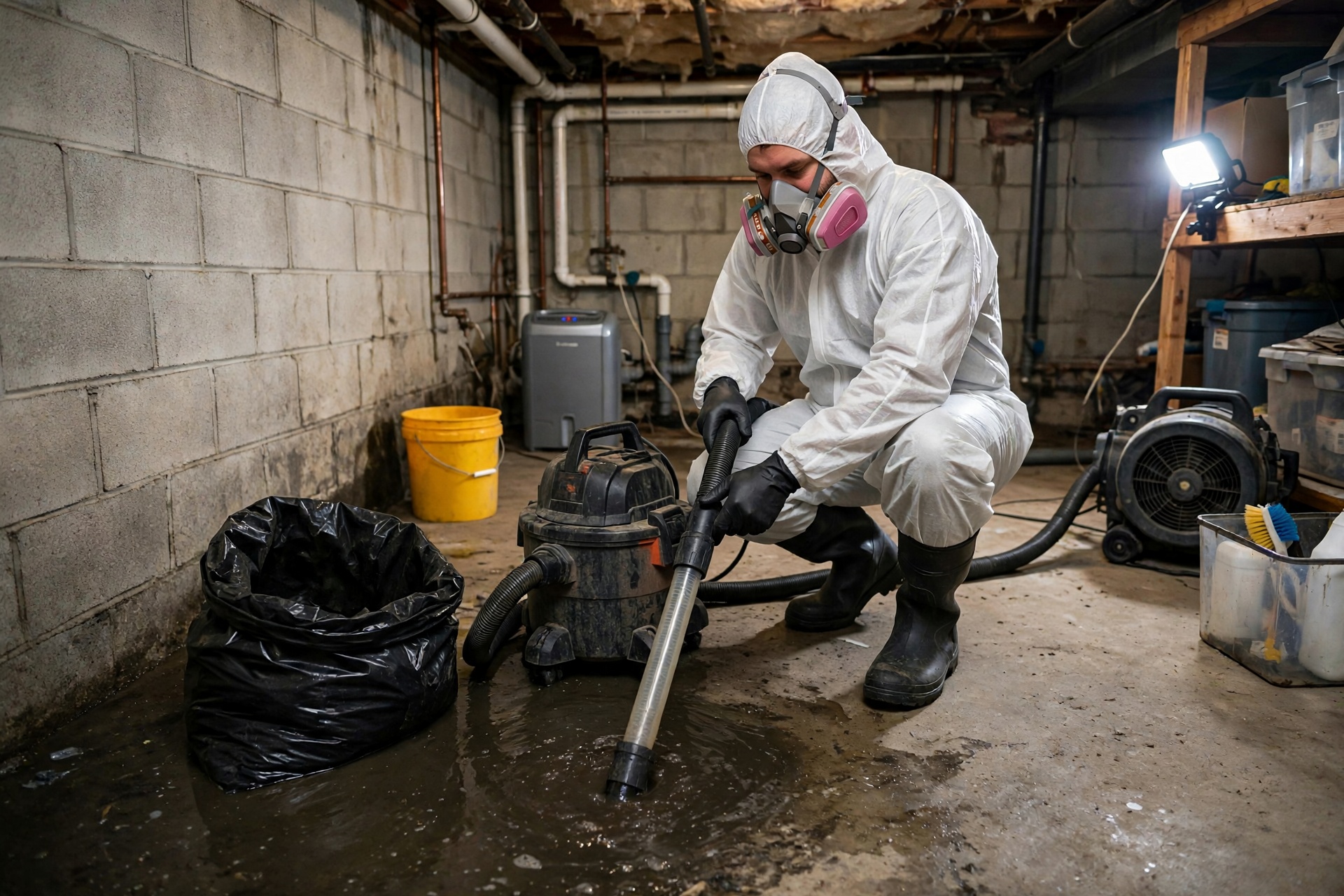
Basements in Odenton neighborhoods like Seven Oaks and Piney Orchard often sit on clay-heavy soils that drain slowly after summer storms. When sewage backs up, the waste quickly saturates carpet pads, subfloors and lower drywall courses. Technicians remove standing water first, then cut away affected materials before bacteria and odors travel upward through the joists. Mild Mid-Atlantic winters keep the ground from freezing deep, so backups from cracked laterals can occur year-round and reach finished lower levels faster than in colder climates.
Homes near the Odenton MARC Station and Odenton Town Center frequently date to the 1970s and 1980s, when cast-iron and clay pipes were common. Tree roots from the Piney Orchard Nature Preserve area invade these lines, creating sudden overflows during humid summer months. Cleanup crews isolate the affected zone, extract contaminated water, apply EPA-registered disinfectants, and run industrial dehumidifiers for several days. Leaving even small amounts of moisture in the concrete slab leads to persistent musty smells that travel through the HVAC system into upper floors.
Anne Arundel County health rules require proper disposal of extracted sewage and documentation of sanitization steps. Crews bag and haul solid waste to approved landfills rather than rinsing it into storm drains that feed into local waterways. After extraction, moisture meters check wall cavities and floor joists; readings above 16 percent prompt additional drying or material removal. This step prevents hidden mold growth that can appear weeks later once humidity spikes again.
Technician insight
In Odenton the thing that catches most people out with basement sewage cleanup is the clay soil layer that sits just below many slabs in Seven Oaks and Piney Orchard. After a backup, water stays trapped against the concrete for days even when the air feels dry, so standard fans alone never finish the job and mold shows up weeks later.
Seven Oaks backup after heavy rain
A homeowner in Seven Oaks called after sewage rose through the floor drain following a summer storm. We found the clay soil had held water against the slab and lower drywall for two days. Extraction, removal of two walls of drywall, and three days of drying brought moisture readings below 12 percent and eliminated the odor before it reached the main floor.
Basement Sewage Cleanup Services We Offer
✓Basement Water Extraction
Removes standing sewage from finished and unfinished Odenton basements using truck-mounted pumps and submersible units.
✓Contaminated Drywall Removal
Cuts and disposes of lower drywall sections soaked by sewage to stop bacteria from migrating into living spaces.
✓Subfloor and Carpet Pad Disposal
Extracts saturated carpet, pad and plywood subfloors common in Seven Oaks split-level homes after backups.
✓Sewage Odor Neutralization
Applies targeted oxidizers and ozone treatments to eliminate odors trapped in concrete and framing near Piney Orchard.
✓Slab and Joist Drying
Uses air movers and dehumidifiers sized for Anne Arundel County humidity to dry concrete slabs and floor joists.
✓Post-Cleanup Moisture Verification
Documents moisture levels with meters before homeowners return to Crofton and Gambrills basements.
Basement Sewage Cleanup Cost in Odenton, MD
| Service | Typical Range | What Affects It |
|---|---|---|
| Small basement extraction only | $450–$850 | Limited to unfinished slab areas under 300 sq ft |
| Finished basement cleanup | $1,200–$2,400 | Includes drywall and carpet removal in 400–600 sq ft spaces |
| Odor neutralization add-on | $300–$550 | Ozone and oxidizer treatment after drying |
| Emergency after-hours response | $150–$300 | Added fee for calls between 8 pm and 6 am |
Pricing confirmed on-site before work begins. Call 24/7 for immediate dispatch.
How it works
- 1
Site Assessment
Technicians arrive within hours, locate the backup source, and map affected zones in the basement.
- 2
Water Removal
Pumps and extraction tools pull sewage from floors and any sump areas before it spreads further.
- 3
Material Removal
Saturated drywall, carpet and insulation are cut out and bagged for proper disposal.
- 4
Disinfection And Drying
EPA-registered agents are applied followed by industrial drying equipment run until readings are safe.
- 5
Final Verification
Moisture checks and odor inspection confirm the space is ready for reconstruction.
Pricing
Pricing depends on volume of water, square footage affected, and whether structural materials must be removed.